

blue reflective glass window
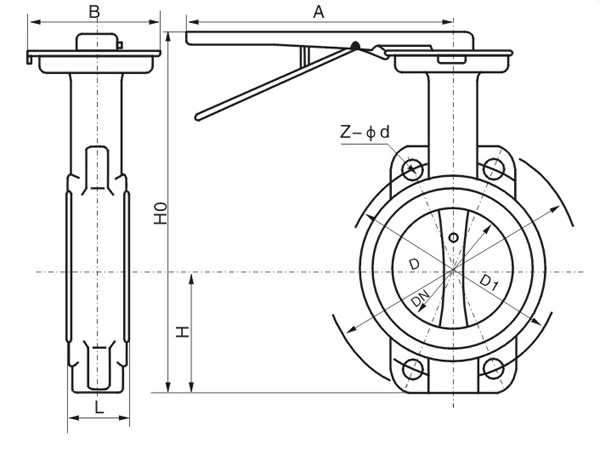
The Importance and Functionality of 48-Inch Butterfly Valves In various industrial applications, controlling the flow of fluids is essential for maintaining operational efficiency and safety. Among the many types of valves available, the butterfly valve stands out due to its unique design, which offers numerous advantages for both large and small scale systems. In particular, the 48-inch butterfly valve plays a crucial role in managing fluid flow in large pipelines and processing facilities. What is a Butterfly Valve? A butterfly valve is a quarter-turn valve that uses a rotating disc to regulate flow. The design consists of a circular disc or vane mounted on a rod, which pivots within the pipe. When the valve is closed, the disc blocks the fluid flow; when it is open, the disc is aligned with the flow path, allowing fluids to pass with minimal resistance. Butterfly valves are highly efficient in terms of space and weight, particularly in larger sizes, such as the 48-inch variety. Applications of 48-Inch Butterfly Valves 48-inch butterfly valves are commonly employed across a range of industries, including water treatment, chemical processing, oil and gas, and power generation. Their ability to provide quick on/off control while minimizing pressure drop makes them suitable for both isolation and throttling applications. In water treatment facilities, for example, butterfly valves are used to control the flow of water through different stages of the purification process. Similarly, in chemical plants, these valves manage the flow of various corrosive and hazardous fluids, ensuring safe and efficient operation. In industries such as HVAC (heating, ventilation, and air conditioning), 48-inch butterfly valves help in regulating airflow and maintaining optimal pressure. Advantages of 48-Inch Butterfly Valves 48 inch butterfly valve One of the key advantages of using a 48-inch butterfly valve is its compact design. Compared to gate or globe valves, butterfly valves occupy less space and are lighter, which simplifies installation and maintenance. Their design allows for easy operation, often requiring only a quarter turn to open or close, which can be advantageous in facilities where quick adjustments are necessary. Additionally, butterfly valves are generally more cost-effective than other types of large valves. They feature fewer parts and are simpler in construction, leading to reduced manufacturing and installation costs. Despite their lower cost, high-quality butterfly valves can provide excellent performance and durability, particularly when constructed from robust materials such as stainless steel or ductile iron, designed to withstand harsh operating conditions. Considerations for Selection and Maintenance When selecting a 48-inch butterfly valve, several factors must be considered, including the type of fluid being controlled, the pressure and temperature conditions, and the specific application requirements. It's essential to choose a valve that meets industry standards and is compatible with the media to ensure safety and reliability. Routine maintenance is also critical to ensure the longevity and proper functionality of the valve. Regular inspections for wear and tear, checking seals for leaks, and ensuring that the actuator functions smoothly can prevent unexpected failures and costly downtime. Conclusion The 48-inch butterfly valve is a vital component in the efficient management of fluid flow in large-scale industrial operations. With its compact design, cost-effectiveness, and suitability for a wide range of applications, it has become an indispensable tool across various sectors. As industries continue to evolve and demand more efficient solutions, the importance of reliable valves, such as the 48-inch butterfly valve, will undoubtedly grow, ensuring safe and controlled operations for years to come.
about
blue reflective glass window
Understanding Gate Valves An Overview Gate valves are essential components in various piping systems, primarily used to control the flow of liquids and gases. One specific model, the gate valve size 2 x 1 x 16, offers a blend of versatility and efficiency that serves many industrial applications. Understanding Gate Valves An Overview The 2 x 1 x 16 size designation refers to the valve's inlet and outlet dimensions, as well as its overall height. The 2-inch inlet suggests a moderate capacity for fluid transfer, suitable for both water and various industrial fluids. The 1-inch outlet allows for specific flow control, while the 16-inch height indicates that this valve can be conveniently integrated into a piping system without occupying excessive space. gate valve 2 1 16 Materials used in the production of gate valves are crucial for their durability and functionality. Common materials include brass, stainless steel, and carbon steel, each offering unique advantages. Stainless steel, for instance, is resistant to corrosion and enhances the valve's longevity, making it a preferred choice in harsh environments. On the other hand, brass gate valves are often favored for their reliability and cost-effectiveness. Installation and maintenance of a gate valve require proper procedures to ensure optimal performance. When installing the 2 x 1 x 16 gate valve, it's essential to position it correctly in line with the flow direction indicated on the valve body. Regular maintenance checks are necessary to identify any signs of wear or potential leakage. Proper lubrication of the stem and ensuring the seating surfaces are free from debris will help maintain the valve's functionality over time. In systems that frequently start and stop, gate valves may not be the best choice due to their slower operation. In such cases, other types of valves, like ball or globe valves, might be more appropriate. However, for applications requiring infrequent adjustments to the flow, gate valves provide reliable isolation, making them a staple in various industries, including water treatment, oil and gas, and manufacturing. In conclusion, the gate valve size 2 x 1 x 16 encapsulates the key features that make gate valves fundamental to industrial applications. Their ability to control flow effectively, combined with a straightforward operational mechanism, underscores their importance in fluid mechanics and system design.
-

High quality industrial productsagement

High quality industrial products
View Details -

Meet the diverse needs of customers

Meet the diverse needs of customers
View Details -

Strict quality control

Strict quality control
View Details -

Top raw materials

Top raw materials
View Details -

Trusted supplier

Trusted supplier
View Details
Our application

news and information
Válvula de gate de 400mm para sistemas de tubulação industriais e comerciais
400mm gate valve .
Various Types of Water Valves and Their Applications in Plumbing and Industrial Systems
Types of Water Valves An Overview Water valves are crucial components in plumbing and irrigation sys
Válvula de globo com 2% de eficiência em sistemas hidráulicos industriais
Válvula de Bola de 2” x 1” x 2” Uma Solução Eficiente para Controle de Fluxo As válvulas têm um pape
 English